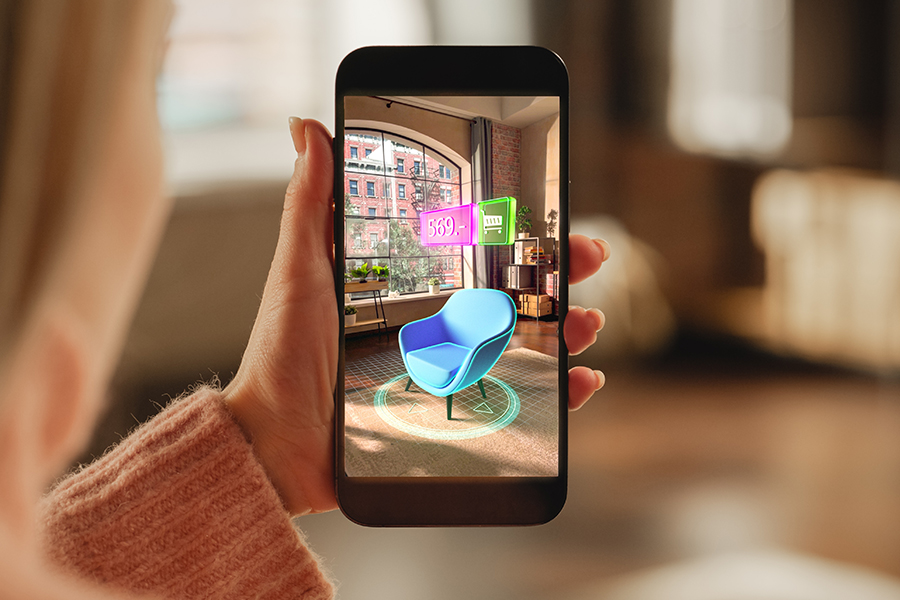
You’ve probably thought about how great it would be to try on a new pair of shoes or a stylish dress without leaving your home. It turns out that this is now a reality thanks to an exciting augmented reality technology known as AR fitting. It’s not just a novelty in the world of online shopping, it’s a real revolution that is changing the way we choose clothes, shoes, accessories, and many other products. In this article, we will dive into the world of AR fitting, learn how it works, and look at exciting examples of its use that are not only exciting but also contribute to business growth. Ready to dive into the future of shopping? Let’s start exploring!

What is AR fitting?
AR is a technology that allows you to virtually try on clothes, shoes, accessories, and other products in real time using devices such as smartphones and tablets. This technology gives you a chance to see how the product will look on you without leaving your home or store. The popularity of augmented reality among users is growing every year – in the last year alone, the AR market grew by 30%. Experts at TrendForce analytics company estimate that the global market for augmented and virtual reality (AR/VR) devices amounted to 9.86 million units in 2021. This is almost twice as much as in the previous year, when the number of devices sold was just over 5 million units, and the forecasted graph is growing rapidly.
How does an AR fitting work?
AR fitting uses the device’s camera to track the user’s movements and body shape. Then virtual objects, such as clothes, are superimposed on the user’s image in real time. This creates the effect that the selected product is actually worn by the person. The technology also allows users to interact with virtual objects, change their color, size, and style.
Examples of AR fitting in business
1. Fashion industry: Many clothing and footwear brands have successfully implemented AR fitting in their online stores. For example, customers can try on a dress, boots, or glasses using an app that uses AR technologies. This allows customers to see how the product will look on them and make more informed purchasing decisions, which reduces the percentage of returns and increases satisfaction.
For example, in 2019, GUCCI introduced a line of sneakers that could be tried on virtually. This innovative approach was so popular with customers that today the brand’s official app offers the opportunity to try on a variety of products: from jewelry and cosmetics to hats and glasses. Thanks to the introduction of augmented reality (AR) technology, GUCCI’s sales have increased by 94% in three years.
3. Furniture business: In the furniture industry, AR fitting allows customers to virtually place furniture in their homes and evaluate how it will fit in with the interior. This reduces the likelihood of mistakes when choosing furniture and reduces the number of returns.
An example of this functionality is the IKEA Place app. It allows you to “place” furniture, such as cabinets, tables, and chairs, in your room, helping you to more accurately visualize the size of the furniture and its appearance in the interior.
AESTAR has successfully implemented a project to create a 3D furniture catalog with the ability to view furniture in your interior. As part of the project, we set ourselves the task of developing the most realistic 3D models that can help designers bring their creative concepts to life. We used advanced technologies such as Blender to create detailed 3D models of modular furniture elements. Our efforts also included working on materials and textures to achieve the highest degree of realism in the created models. As a result, we created a collection of accurate and realistic upholstered furniture models that successfully met the needs of our clients and allowed designers to bring their ideas to life.
3. Cosmetics sector: Many cosmetics companies offer AR makeup try-on apps. Customers can see how a certain makeup or lipstick shade will look on their face, which helps them make more informed purchasing decisions. L’Oreal was one of the first companies to use AR as a sales tool in the beauty industry.
In 2014, it released a mobile app called MakeUp Genius, which allows users to virtually try on different makeup looks using the company’s products. The results were impressive: more than 10 million people downloaded the app, and more than 25 million makeup looks were created using various cosmetics products in the app.
4 Optics: Eyewear stores and brands are using AR fitting rooms to allow customers to virtually try on different models and styles of glasses. This allows them to choose the right frame for their face shape and individual preferences. Try on AR glasses right now with the help of the AESTAR case.
Warby Parker’s Virtual Try-On offers customers the opportunity to virtually try on different models of glasses using their Virtual Try-On mobile app, helping customers make more informed decisions and enhancing the quality of online shopping.
The introduction of augmented reality (AR) technologies can significantly reduce the rate of product returns, as customers are able to evaluate products in more detail before purchasing.
Here are some examples of businesses that have increased their visibility thanks to AR technologies:
1. AESTAR’s successful case study of creating a digital catalog of Grohe plumbing fixtures with augmented reality viewing has significantly increased customer loyalty after using the AR product catalog. From a marketing perspective, this project allowed our client to stand out from the competition and provide potential customers with a unique opportunity to get acquainted with their products through augmented reality technology. This led to increased brand awareness and improved user experience on the website.
2. The well-known global jewelry brand Tiffany & Co. provides customers with the opportunity to virtually try on their precious jewelry using a mobile application. Customers can see how a ring or necklace will look on them and choose the perfect piece of jewelry without having to visit a physical store.
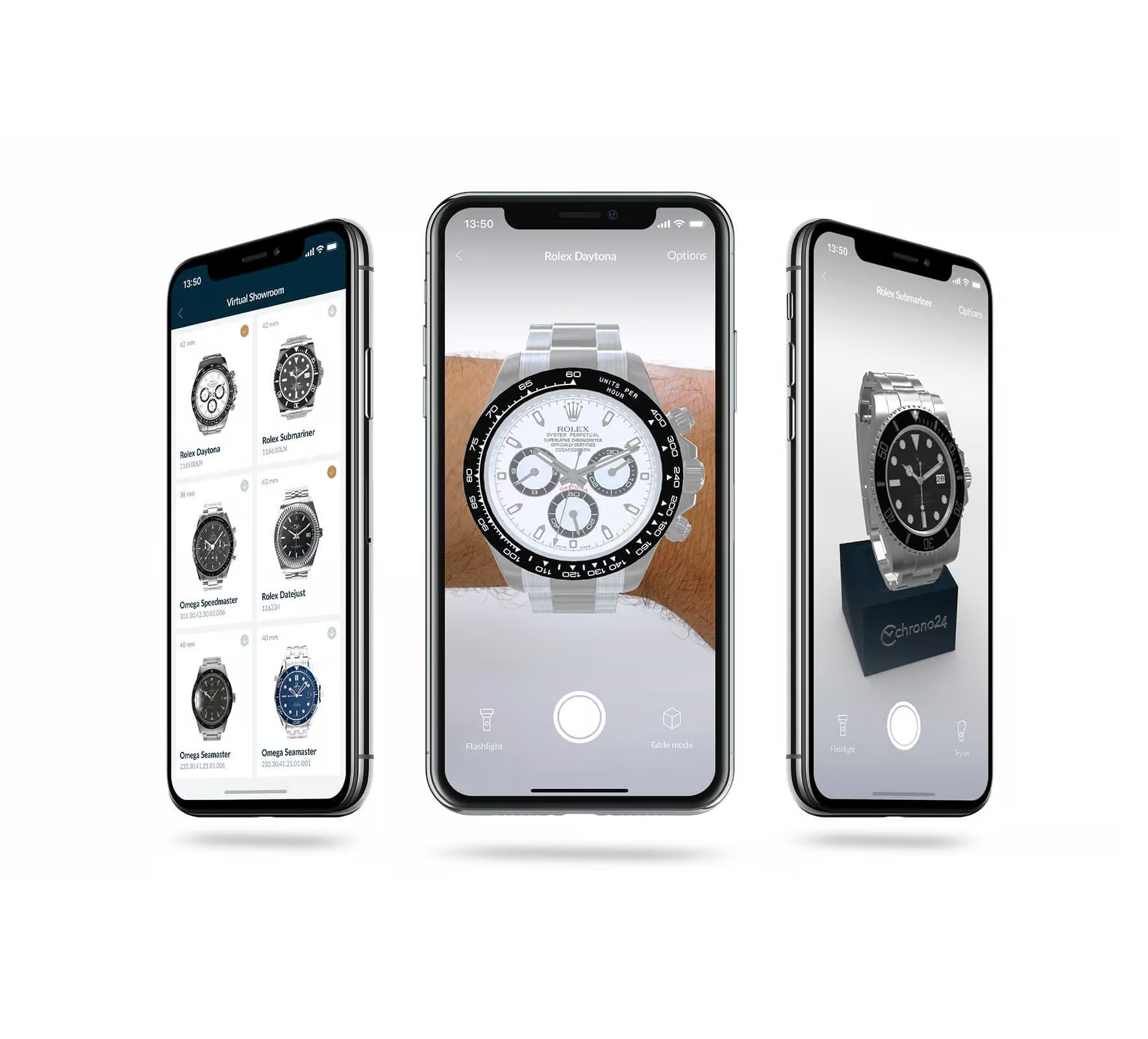
3. The famous Swiss watchmaker TAG Heuer has implemented AR fitting for its watches. This allows potential buyers to visually assess the design and style of the watch on their wrist before making a purchase. It also helps to reduce returns due to unsuitable size or style.
4. Shoe stores and brands, such as Nike and Adidas, offer AR shoe fitting. Customers can virtually try on sneakers and evaluate their comfort and style. This reduces the percentage of returns due to unsatisfactory fit.
These examples demonstrate how AR technologies can help businesses reduce their return rates by giving customers the opportunity to evaluate products more thoroughly before purchasing, thus increasing their confidence in buying.
AR fitting is an integral part of the future of online shopping and business. Not only does it enrich the customer experience, but it also brings real benefits to businesses by helping to increase sales and reduce returns. As AR technology improves, we can assume that this exciting industry will continue to evolve and expand.
Well, it may seem like a daunting task, but we have experience with eCommerce applications. You just need to describe your concept, and our AESTAR team will take care of all aspects of the technical and organizational side. Feel free to contact us using the contact form or send us a message at office@aestar.tech to get started on your project.


